Quick loom knitting knowledge: You can print them and put them onto a small clip and carry them with you everywhere you go, or simply save them to your computer.

Come loom knit with me!
Quick loom knitting knowledge: You can print them and put them onto a small clip and carry them with you everywhere you go, or simply save them to your computer.
Quick loom knitting knowledge: You can print them and put them in a small clip and carry them with you everywhere you go, or simply save them to your computer.

Quick loom knitting knowledge: You can print them and put them in a small clip and carry them with you everywhere you go, or simply save them to your computer.
Sl1-k1-psso


The Iva Headband is a double knit design, that widens as the knitting progresses to keep wind away from the ears thus keeping the wearer warm. The pattern uses simple decreases and increases. Use a super soft merino yarn and complete the perfect winter headband!
Knitting loom: Basic Loom Knitting Kit Loom, (Oval small loom with 32 pegs.) Any of the other KB knitting looms set to a knitting board can be used for this pattern.
Yarn: Approx 50 yards of worsted weight
yarn. Malabrigo Worsted in Natural (white headband) and Gina by Plymouth Yarn Company (3 tone headband) were used in samples. 4, 12 inch pieces of contrasting color yarn (to hold stitches)
Notions: Knitting tool, tapestry needle.
Other: 1 button
Size: It is approx 17 inches in length, due to the elasticity of knitted fabric, the headband fits well in heads up to 21 inches in circumference. At widest point, it is 4 inches.
Pattern notes: Please follow the links to see diagrams on the special techniques used in this pattern. The headband is worked in double knit, using the stockinette stitch. Increases are used at the beginning of the headband to widen it, then decreases are used to make it less wide.
Abbreviations st(s)=stitches Inc=Increase Dec=Decrease
INSTRUCTIONSWhite-Iva-Headband-Powdered-2
Using the Figure 8 cast on 4 sts.
*Work 4 rows in stockinette stitch.
Inc 1 st at each end by moving last st out one peg*. (6 sts)
Rep from * to * until there are 14 sts on the loom
Work 10 rows in stockinette stitch.
Divide the board in half, 7 sets of sts on each side. Side A and Side B.
You will work on half of the board at a time, Side A first then Side B.
On the side with the working yarn, work 14 rows in stockinette stitch.
Removal 1: Using the two pieces of scrap yarn and tapestry needle, carefully, remove the first seven 7 sts from one side and leave them on the piece of scrap yarn. Remove the 7 sts from the opposite side to a second piece of scrap yarn.
Cut working yarn and join to Side B.
Work 14 rows in stockinette stitch. (Headband will look like picture 1 below).
Removal 2: Using 2 pieces of scrap yarn, carefully, remove the first seven 7 sts from one side and leave them on the piece of scrap yarn. Remove the 7 sts from the opposite side to a second piece of scrap yarn. (see picture 2)
All the stitches are now off the knitting loom. It is time to cross all the stitches. (see picture 3)
Without twisting the stitches, simply slide all the stitches from Side A to Side B (see picture 4 below).
Place stitches from side B on the pegs emptied at Removal 1. Place the stitches from side A, onto pegs emptied by Side B at removal 2.
Headband set up
All 14 sts are back on the knitting loom.
Work 10 rows in stockinette stitch.
*Dec 1 st at each end.
Work 4 rows in stockinette stitch.*
Rep from * to * until 4 sts remain on the loom.
Bind off
Weave ends in.
Two option for closure:
Option 1: Simply overlap the cast on edge over bind off edge and sew in place. Add a button for decoration purposes.
Option 2: Crochet a 1 inch chain at the bind off edge. Attach a button about an inch from the cast on edge. Use the crochet chain as a button loop.

Loving the latest nonchalant style in hats, a soft slouchy look that provides you with a sense of softness and youthfulness. Jordyn’s Slouchy Hat is named after my beautiful model who provides the hat with the perfect attributes.
Pattern Information
Knitting Loom: All-n-One Knitting loom, using 102 pegs.
Yarn: 160 yards of main color in worsted weight yarn. About 20 yards of 6 different color worsted weight yarn (20 yards of each). Knit Picks Swish Worsted in Wonderland Heather was used for main color. Knit Picks City Tweed Aran in Lemon Curd, Tahitian Pearl, Jacquard, Cobalt, Orca and Obsidian were used for contrasting colors.
Notions: knitting tool, measuring tape
Gauge: 20 sts x 24 rows=4 inches. Row gauge is not important as you can knit more rows. Stitches per inch is of importance.
Abbreviations
K=knit stitch
P=purl stitch
Cont=Continue
CF2=Cable involving 2 stitches; cable leans to the left.
How to: Skip peg 1 with yarn towards the back of the peg. Knit peg 2. Place stitch from peg 2 on cable needle (or simply hold it with your fingers. Take yarn to the front of peg 1. Knit peg 1. Place stitch from peg 1 on peg 2. Place stitch that you are holding on the empty peg 1.
A=Swish Worsted in Wonderland
B=City Tweed Aran in Cobalt
C= City Tweed Aran in Orca
D= City Tweed Aran in Jacquard
E= City Tweed Aran in Tahitian Pearl
F= City Tweed Aran in Lemon Curd
G= City Tweed Aran in Obsidian
Pattern notes: Hat is worked in the flat for the brim and then in the round for the body of the hat. Tassels are worked separately and added after hat is complete. When you have to pick up A to continue working with it, simply carry the yarn up, behind the work. (See photo)
INSTRUCTIONS
Cast on should go from Right to Left direction.
Using A, cast on 102 sts with the yarn over cast on, prepare to work a flat panel.
Row 1: *k2, p2; rep from * to last 2 sts, k2.
Row 2: As row 1.
Row 3: *CF2, p2; rep from * to last 2 sts, CF2
Row 4: As row 1
Rep Rows 3 and 4: 7 more times.
Next 5 rows: k to the end of row.
Join B, do not cut A.
From this point on, work in the round.
Next round: with B, knit to the end of the round.
Next 4 rounds: with B, purl to the end of round.
Cut B, cont with A.
Next 5 rounds: with A, k to the end of round
Join C, do not cut A.
Next round: with C, knit to the end of the round.
Next 4 rounds: with C, purl to the end of round.
Cut C, cont with A.
Next 5 rounds: with A, k to the end of round
Join D, do not cut A.
Next round: with D, knit to the end of the round.
Next 4 rounds: with D, purl to the end of round.
Cut D, cont with A.
Next 5 rounds: with A, k to the end of round
Join E, do not cut A.
Next round: with E, knit to the end of the round.
Next 4 rounds: with E, purl to the end of round.
Cut E, cont with A.
Next 5 rounds: with A, k to the end of round
Join F, do not cut A.
Next round: with F, knit to the end of the round.
Next 4 rounds: with F, purl to the end of round.
Cut F, cont with A.
Next 5 rounds: with A, k to the end of round
Join F, do not cut A.
Next round: with G, knit to the end of the round.
Next 4 rounds: with G, purl to the end of round.
Cut G, cont with A.
Next 8 rounds: with A, k to the end of round
Bind off with gather removal method.
Steam block.
Tassels
(Make 2)
Cut 12 lengths of yarn (choose the colors you like the most), about 40 inches long each piece. Hold them all together at mid length (about 20 inches)
Using a crochet hook, pass the crochet hook through one of the stitches at the sides of the hat. Make a slip knot with the tassel so the knot ends up as close to the brim of the hat as possible. You should have 24 strands of yarn.
Divide the yarn strands into three groups of 8. Make a braid with the three groups of 8. Once the braid reaches desired length finish the braid with a slip knot. Clip the remainder of the yarn strands to an even length, leaving about 1 inch of length at the end of the knot.
Repeat for the tassel.
 I love small projects, they give me a sense of satisfaction in the midst of an ever moving world. Create hundres of this to decorate around this holiday season, or simply to use them as small companions to holiday presents.
Materials
Loom: Loom with 12 pegs in large gauge. Sample was knit with Flower Loom (orange loom) by ProvoCraft. Pattern can be created on another loom with a different gauge but size will vary according the gauge of the knitting loom.
Yarn: Aprox., 30 yards of bulky weight wool. Sample was knit with Lion Brand Thick & Quick
Notions: Knitting tool, tapestry/yarn needle, size G crochet hook
Gauge: 12sts x 16 rows=4 inches
Size: 4 inches x 2 inches
Pattern Notes:
Entire pattern is worked in stockinette stitch (knit every row).
Worked clockwise around the loom (from right to left).
Yarn should be by first peg (on the right side).
Special Instructions:
Wrap: lift the loop that is currently on the peg, take working yarn to the inside of the loom, wrap the peg in counterclockwise direction if peg is on the left side, wrap the peg in a clockwise direction if peg is on the right side. Place the loop back on the peg. Leave the peg with both loops on it and continue as pattern directs.
Abbreviations:
K=knit (upside down purl, or flat stitch)
P=purl
Sts=stitches
rnd: round (all the way around the loom)
row=flat knitting (knit back and forth from peg A to peg B, then from peg B to A)
Directions
Cast on 12sts, join to work in the round
Cuff
Rnd 1-3: *k1d, p1: rep from *to the end of round
Thumb (worked flat on pegs 1-4)
On pegs 1-4: Work 10 rows in knit stitch
Next: work 10 rounds in knit stitch
Bind off: Remove with gather removal method.
Assembly: sew the thumb sides closed
Loop: with hood and beginning yarn tail, work 15 chains. Close the loop by securing the unattached end to the mitt.
Weave ends in. Block if needed. Make one hundred more using all your left over yarns ;).
I got an email the other day about my little Christmas Tree pattern and where it went. I am sorry, it was one of those patterns that I had for sale and I pulled it down when I closed my shop here, at loomknit. I haven’t had a chance to post it before, I apologize. Here it is for your enjoyment. This was published in December of 2009 at loomknit.com and was for sale at the same website until mid 2013.

As I browsed through the decor area of one of my favorite stores, I came upon a beautiful little felted Christmas Tree. I fell in love automatically. The tree was made of out felt material just stitched together and decorated with little bells all around. I went home with the idea of the little felted tree. I am terrible with the sewing machine so I kept the idea in the back burner for a future use. Later as I was doing things around the house, it occurred to me that I could just knit myself a little tree of my own. It wouldn’t be sewn like the one I saw but it would still be a little tree. Off to work I went and thus my little ornament was born.
Materials:
Knitting Loom: 15 peg knitting loom with pegs spaced at 1/2″ from center to center.
Yarn: Bits of left over wool yarn in both brown and green. Lion Brand Wool in Lemongrass and Cocoa.
Other:
• 3 yards of clear elastic bead cord, size .5mm.
• 10 round beads silver plated, size 4mm.
• Poly-fill to stuff the little tree.
• Tapestry needle
Size of panels before seaming: 6 inches x 4.5 inches
Abbreviations:
HOW-TO:
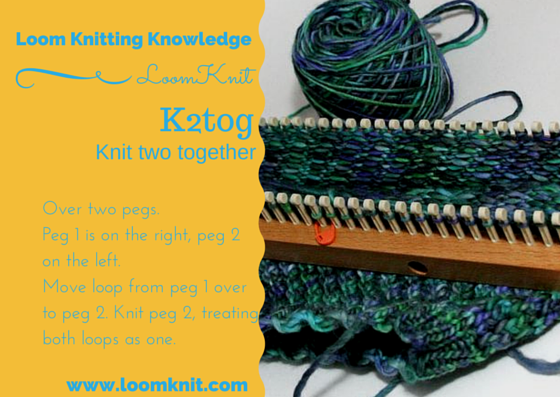
K2tog: Move stitch from peg 1 over to peg 2. Treat both loops on peg 2 as one loop.
SSK: Move stitch from peg 2 to peg 1. Treat both loops on peg 1 as one loop. K3tog: A double decrease, decrease of 3 stitches down to 1. Move stitch from peg 2 to peg 3, move stitch from peg 1 to peg 3. Pegs 1 and 2 are empty. Treat the three loops on peg 3 as one.
K3tog: Move stitch from peg 2 to peg 3, move stitch from peg 1 to peg 3. Peg 3 has three loops, pegs 1 and 2 are empty. Treat the three loops on peg 3 as one loop.
DIRECTIONS
(make 2)
Using B, CO on the center 5 pegs
Row 1-8: Sl1, k to the end of row
Cut B, leaving a 5 inch tail. Make a slip knot with A and place it on peg 15. CO 5, k the center 5 stitches, CO 5. (15 stitches on the loom).
Next 2 rows: Sl1, k to the end of row
*Next row: Sl1, k2tog, k to last 3sts, ssk, k1
Next three rows: Sl1, k to the end of row*
Repeat from * to * until 5 stitches remain on the loom
Next row: Sl1, k3tog, k1
Next 3 rows: Sl1, k to the end of row
Next row: k3tog.
BO leaving a 15 inch tail.
Assembly
Mattress stitch seam along the end of the tree using the long tail coming from one of the BO points of one of the panels. Before seaming the entire tree, stuff lightly with Poly-fill.
Thread tapestry needle with clear elastic beading thread and pass one silver bead through. Position the silver plated bead as desired on the little Christmas Ornament and secure with a surgeon’s knot. Repeat with each bead until the little tree is decorated to your liking. Option: you could hot glue the beads on. Sample uses the following configuration to position the beads.
BO=Bind Off
The processs of removing an item off the loom. The item can be removed in a gather method as for the top of a hat, or a basic bind off as in the edge of a scarf.
CC=Contrasting Color
C4B=Cable 4 Back
Cable that takes over 4 pegs, it leans to the right. Pegs are numbered as follows:
Peg 4-Peg 3-Peg 2-Peg 1
Remove stitches from pegs 1 and 2 and hold them on a cable needle.
Knit pegs 3 and 4. Transfer these stitches as follows: from peg 3 to peg 1, from peg 4 to peg 2.
Place the stitches from the cable needle back on the loom on the emptied pegs, 3 and 4. Knit these two pegs.
Go to each of the cable pegs and gently pull out any yarn slack to tighten the cable.
C4F=Cable 4 Front
Cable that takes over 4 pegs, it leans to the left. Pegs are numbered as follows:
Peg 4-Peg 3-Peg 2-Peg 1
Take working yarn behind pegs 1 and 2 and place it in front of peg 3.
Knit peg 3 and peg 4. Place these two loops on a cable needle.
Take working yarn to peg 1. Knit peg 1 and peg 2. Move these stitches over to the empty pegs 3 and 4 as follows: from peg 2 to peg 4, from peg 1 to peg 3.
Place the stitches from the cable needle and place them on pegs 2 and 1.
Go to each of the cable pegs and gently pull out any yarn slack to tighten the cable.
CO=Cast on
The process of placing the foundation row of stitches on the knitting loom. There are various cast on methods, they all vary in the way the first row looks and the stretchability of the first row.
Cont=Continue
There are various ways to create the knit stitch.
Method 1: Knit Stitch (true knit stitch)
Place working yarn above the loop on the peg. Insert knitting tool from below and up through the loop, hook the working yarn, forming a loop. Remove the loop that is currently on the peg while holding onto the new loop, place this new loop on the emptied peg.
Method 2: Knit Stitch as a Flat Stitch (Abbreviated as FS)
Place the working yarn above the loop on the peg. Lift the loop that is on the peg, up and off the peg.
Method 3: Knit Stitch as a U Stitch (Abbreviated as US)
Place the working yarn above the loop on the peg, and “hug” the peg with the working yarn by going around the peg. Lift the loop that is on the peg, up and off the peg.
P=Purl Stitch
Place working yarn below the loop on the peg. Insert knitting tool from above and down through the loop, hook the working yarn, forming a loop. Remove the loop that is currently on the peg while holding onto the new loop, place this new loop on the emptied peg.
K2tog=Knit two stitches together
A right slanting decrease. Takes place over 2 pegs. Number the pegs 1 and 2, from right to left, as follows: Peg 2 -Peg 1. Remove stitch from peg 1 and hold it. Move stitch from peg 2 to peg 1. Place the loop you are holding back on peg 1. Work both loops together as one loop. *Note: usually, you move this loop over to peg 2 to leave peg 1 empty to create a yarn over.
SSK=Slip, slip, knit.
A left slanting decrease. Takes place over 2 pegs. Number the pegs 1 and 2, from right to left, as follows: Peg 2 -Peg 1. Remove stitch from peg 2 and place it on peg 1. Work both loops together as one loop.
cdd=centered double decrease.
Decreasing from 3 stitches down to 1. It is over 3 pegs, pegs are numbered as follows: PEG 3, PEG 2, PEG 1 (Peg 1 is on the right and peg 3 on the left). Move stitch from peg 1 to peg 2. Take working yarn behind peg 1 and peg 2, knit peg 3. Move stitch from peg 3 over to peg 2. Lift bottommost two stitches (loops) up and off the peg.
M1= Make 1 (M1).
The M1 is an invisible increase stitch worked with a left or right slant. The right slant is used on the left side of the knitting loom and the left slant on the right side. To prevent a hole from being formed by the increase, this increase stitch is twisted. To create the M1, move the stitch(es) outwards to open a peg for the new stitch. Reach for the bar coming from between the two stitches, twist the bar counterclockwise (to create a Right Slant increase), twist it to the clockwise (to create a Left Slanting decrease), place it on the empty peg. On the following row/round, work the stitch as normal.
HH=Half Hitch
The Half Hitch is used to increase at the beginning of a new row. On the left side: with working yarn coming from the knitting loom, make a loop (clockwise) so that the working yarn ends on the top. Flip it and place it on the empty peg. The working yarn will be coming from underneath the loop and naturally the working yarn will be ready to go to the right.
YO=Yarn over
Created by ewraping the empty peg. Used to create the opening for lace items–it creates a small hole. Note: On the next row, untwist the ewrap and place this strand of yarn in front of the peg, then work the peg as instructed (either purl it or knit it).

The Curly Q Scarf is a great way to practice working with short rows. It was first introduced back in 2005 and it was one of the first short-row scarves on the knitting loom. Enjoy!
A real twist to your scarves. The Curly Q scarf implements short-rows to create the twists all over the CurlyQ scarf. The pattern was created on a small gauge knitting loom, however, many have been knitted on the Knifty Knitter looms.
Materials
Knitting loom: Knitting loom in small gauge (1/2" from center to center of peg) with at least 22 pegs. The small gauge sock loom from Décor Accents, Inc. was used in sample.
Yarn: 250-400 yards of worsted weight wool or wool blend yarn. Smart Mohair by Berroco was used in sample.
Notions: Knitting tool; 6 peg markers or rubber bands, preferably 3 of one color and 3 of different color.
Skills Knowledge: Knit stitch, purl stitch, flat panel knitting.
Size: Shown: 65 inches in length. Width varies by yarn used.
Pattern Notes:
Knit: refers to the flat stitch through out the pattern
W&T= Wrap and Turn:
Wrap & Turn on a Knit row: Wrap the next peg in a clockwise direction, knit back to peg 1 as called in pattern.
Wrap & Turn on a Purl row: Remove the loop that is on the next peg and hold it with the knitting tool, with working yarn, wrap around that next peg in a clockwise direction, so the yarn ends to the front of the loom. Place the loop back on the peg (peg will have the wrap and the loop, thus 2 loops on it). Purl back to peg 1 as called in the pattern.
You will be skipping the first stitch in every row, also known as slipping the stitch.
Repeat items in [ ] the number of times next to it.
Information in ( ) underneath each row explains in detail how to accomplish the row.
Prep loom: Place markers of same color on pegs: 6, 8, 10. Place the other color markers on pegs: 13, 15, 17. See picture.
The pattern is worked in 2 parts; the 22 pegs will be divided into 2 parts: part 1 has 11 pegs (blue pegs). Part 2 has 11 pegs (lavender pegs). First, you will work on 11 pegs then you will purl on the other 11 pegs.
Visual Diagram
(click on diagram to enlarge)
The following diagram is a visual of how the pattern is knitted. Each square represents a peg. Each row is a row that you knit. Start at the top on row 1, from left to right. You will be knitting a flat panel-working from right to left on the loom as in following the letter “C”
Definitions for diagram:
P=Purl
K=Knit Flat Stitch
SK=Skip the peg
W=Wrap and turn back
K20=lift 2 over 1, leaving only 1 loop on the peg
P20=purl 2 over 1, leaving only 1 loop on the peg

INSTRUCTIONS
Cast on 22 stitches, prepare to work a flat panel.
Set up row: Purl 11 stitches. Knit 11 stitches with the flat stitch.
Row 1: Skip 1, k8, W&T peg 10, knit to the end
(Skip 1st peg, 8 pegs are flat stitched, peg 10 has a wrap on it, thus has 2 loops. Turn and knit back to peg 1)
Row 2: Skip 1, k6, W&T peg 8, knit to the end
(Skip 1st peg, knit 6 pegs, peg 8 has a wrap on it, thus has 2 loops)
Row 3: Skip 1, K4, W&T peg 6, knit to the end
(Skip 1st peg, 4 pegs are knitted, peg 6 has a wrap on it, thus has 2 loops)
Check the following before doing row 4: pegs 10, 8 and 6 will have 2 loops and pegs 1, 2, 3, 4, 5, 7, 9 will have 1
Row 4: Skip 1, k4, [knit 2 over 1, knit 1] 3 times. Purl 11 stitches to the end of the row.
(Skip 1st peg, knit 4 pegs, knit 2 over 1 on peg 6, knit on peg 7, knit 2 over 1 on peg 8, knit on peg 9, knit 2 over 1 on peg 10, knit on peg 11. Do not wrap and turn, continue to the end of the row in the purl stitch—purl 11 stitches. )
Row 5: Skip 1, p8, W&T peg 10, purl to the end
(1st peg is skipped, 8 pegs are purled stitched, peg 10 has a wrap on it, thus has 2 loops. Turn and knit back to peg 1)
Row 6: Skip 1, P6, W&T peg 8, purl to the end
(1st peg is skipped, 6 pegs are purled, and peg 8 has a wrap on it thus has 2 loops)
Row 7: Skip 1, P4, W&T peg 6, purl to the end
(1st peg is skipped, 4 pegs are purled, peg 6 has a wrap on it thus has 2 loops)
Check the following before doing row 8: pegs 10, 8 and 6 will have 2 loops and pegs 1, 2, 3, 4, 5, 7, 9 will have 1
Row 8: Skip 1, p4, [purl 2 over 1] 3 times. Knit to the end of the row.
(Skip 1st peg, knit 4 pegs, purl 2 over 1 on peg 6, purl on peg 7, purl 2 over 1 on peg 8, purl on peg 9, purl 2 over 1 on peg 10, purl on peg 11. Do not wrap and turn, continue to the end of the row in the knit stitch—knit 11 stitches. )
Repeat Rows 1-8 to the end of item.
Finishing
Knit one entire row over the 22 pegs.
Bind off with basic removal method.
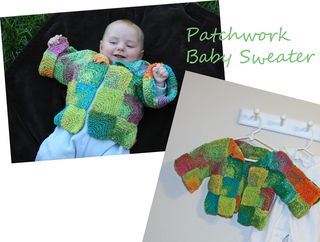
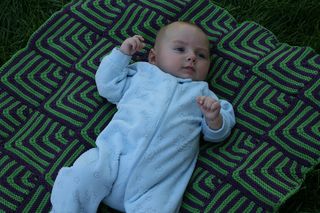
Three designs made with mitered squares! Super excited to finally have these out there. It has been a long time in the making but finally able to have them out in the world! Enjoy!
All three designs are being house at the KnittingBoard.com blog.

 LOOM KNIT